
Clark County Criminal Case Files
A criminal court record is the court file that begins once a prosecutor files a charge, complaint, information, citation, or related criminal pleading. It is not the same as a jail roster, booking log, arrest report, or sheriff record. In Clark County, the court record is the best source for filed charges, amendments, pleas, hearings, orders, dispositions, sentence terms, fines, costs, and probation conditions that are public.
Misdemeanor criminal cases and felony preliminary hearings are handled in the Magistrate Division of the District Court. Felony prosecutions proceed in District Court after bindover or indictment. Idaho does not have a separate Clark County municipal court, justice court, JP court, or county court for these local criminal case files. For arrest-to-charge detail, use Clark County arrest records and court charges. For all case categories, use Clark County court records.
Search Clark County Criminal Cases
Use the Idaho iCourt Portal to begin a public Clark County criminal case search. Smart Search can locate cases by record number, party name, business name, filing date, case type, case status, and other advanced filters. Search Hearings can help find criminal settings, while Make Payments is used for eligible criminal and traffic payments.
The manifest image for iCourt Make Payments is relevant because criminal case records can include fines, costs, and payment status.
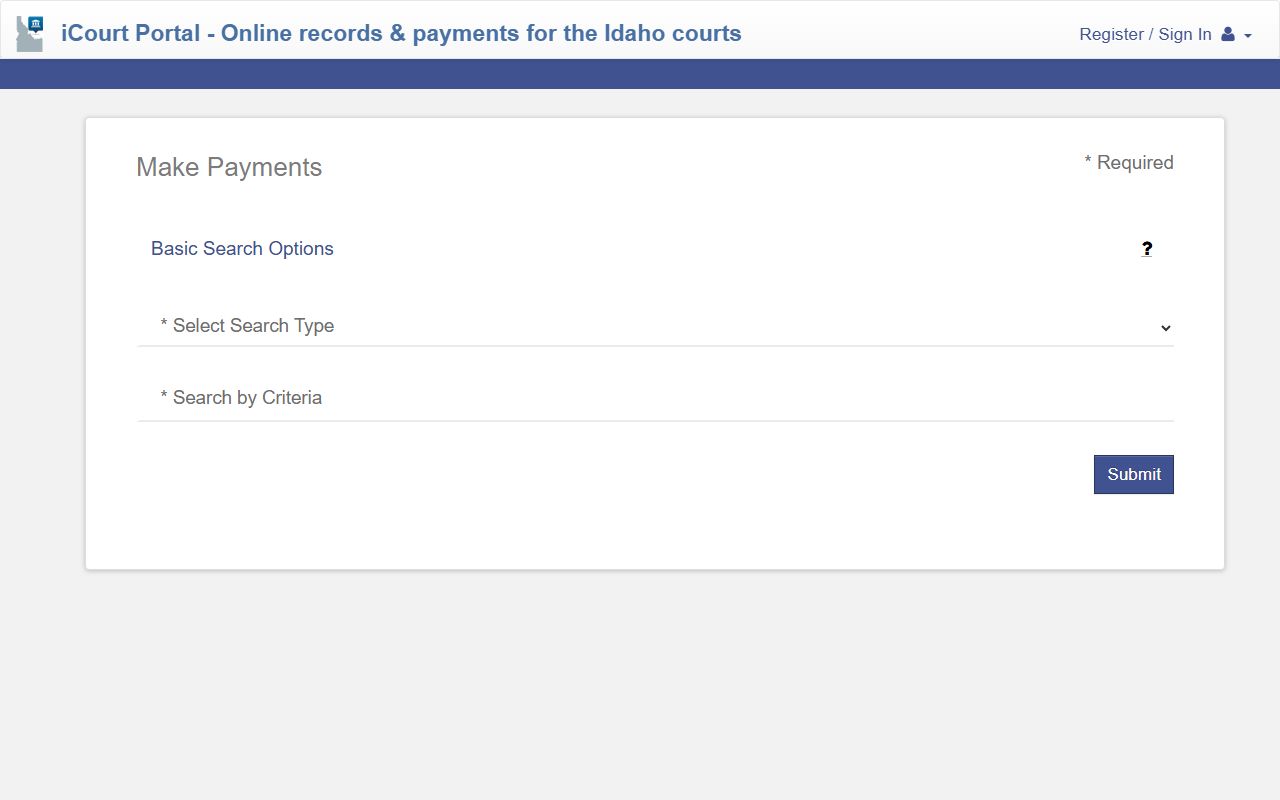
The payment screen is not the whole criminal file, but it shows why financial fields can appear after a disposition or sentence.
- Open iCourt and start with Smart Search for a defendant name or case number.
- Use Clark County as the location filter when that filter is available.
- Narrow by criminal case type, case status, filing dates, or judicial officer when the first search returns too many results.
- Open the public case record to read docket entries, hearings, charge history, disposition, and sentencing events.
- Request filed documents or certified copies from the Clerk when the online case screen is not enough.
For local copies, the courthouse and county offices are at 224 West Main Street, Dubois, ID 83423, with mailing at PO Box 205, Dubois, ID 83423. The court directory main phone is 208-374-5402, and Clerk Stephenie Stewart is listed at 208-374-5304.
Clark County Criminal Case Flow
Criminal court records should be read in order. A filed charge does not mean a conviction. The same case can show an initial complaint, an amended charge, a dismissed count, a plea to one count, a trial setting, a disposition, and a sentence. Each stage adds a different kind of event to the court record.
Case flow: Charges Filed › Arraignment › Pretrial › Plea or Trial › Disposition › Sentencing
| Stage | What Happens |
|---|---|
| Charges Filed | The prosecutor files a complaint, information, citation, or related charging document. |
| Arraignment | The defendant appears, the charge is addressed, and a plea may be entered. |
| Pretrial | Motions, discovery issues, bond questions, continuances, or negotiations may be docketed. |
| Plea or Trial | The case may resolve by plea, bench trial, jury trial, dismissal, or other court action. |
| Disposition | The record states the outcome, such as dismissed, guilty plea, conviction, acquittal, or judgment. |
| Sentencing | The court records jail, fines, costs, probation, withheld judgment terms, or other conditions where public. |
What Clark County Criminal Records Show
A Clark County criminal court record can include the complaint or information, probable-cause documents where public, arraignment minutes, plea entries, hearing dates, motions, orders, docket entries, disposition, sentence, fines, costs, and probation terms where public. It may also show warrants, failure-to-appear events, payment activity, and amended charges, depending on the case and access rules.
| Field | What It Shows |
|---|---|
| Case Number | The criminal court case identifier used for iCourt lookup and Clerk requests. |
| Defendant | The person charged in the criminal case, subject to redaction or restriction rules. |
| Charging Document | The complaint, information, citation, indictment, or amended filing that starts or changes the case. |
| Charges | Filed counts, offense names, severity, and status where public. |
| Hearings | Arraignment, pretrial, motion, trial, sentencing, review, or other court settings. |
| Motions and Orders | Requests by parties and written court rulings when public. |
| Plea | The defendant's formal response, such as guilty, not guilty, or other accepted plea entry. |
| Disposition | The case outcome, including dismissal, conviction, acquittal, plea, or judgment. |
| Sentence | Jail, prison, probation, fines, costs, terms, or withheld judgment details where public. |
Clark County Charges vs Convictions
Charges and convictions must be kept separate. A charge is an accusation filed in court. A conviction is an outcome after a guilty plea, verdict, or other judgment that supports conviction status. Clark County criminal court records can show charges that were amended, reduced, dismissed, or tried without a conviction.
| Point | Charge | Conviction |
|---|---|---|
| Meaning | A filed accusation or count. | A final or accepted guilt outcome. |
| Where It Appears | Complaint, information, citation, docket, or amended filing. | Disposition, judgment, plea, verdict, or sentence entry. |
| Can Change | Yes, it may be amended, reduced, or dismissed. | Usually changes only by later court order, appeal, or record-relief process. |
| How to Verify | Read the docket and charging entries. | Read the disposition and sentencing entries. |
Clark County Criminal Defense Contacts
The county maintains a Prosecuting Attorney page. Research also notes that the Idaho Prosecuting Attorneys Association lists Janna Birch for Clark County. The prosecutor's records role is important because a sheriff arrest or booking accusation is not always the same as the formal charge filed in court. The filed court charge controls the criminal case record.
Idaho has a State Public Defender system. The Idaho State Public Defender page is one of the assigned criminal record images.
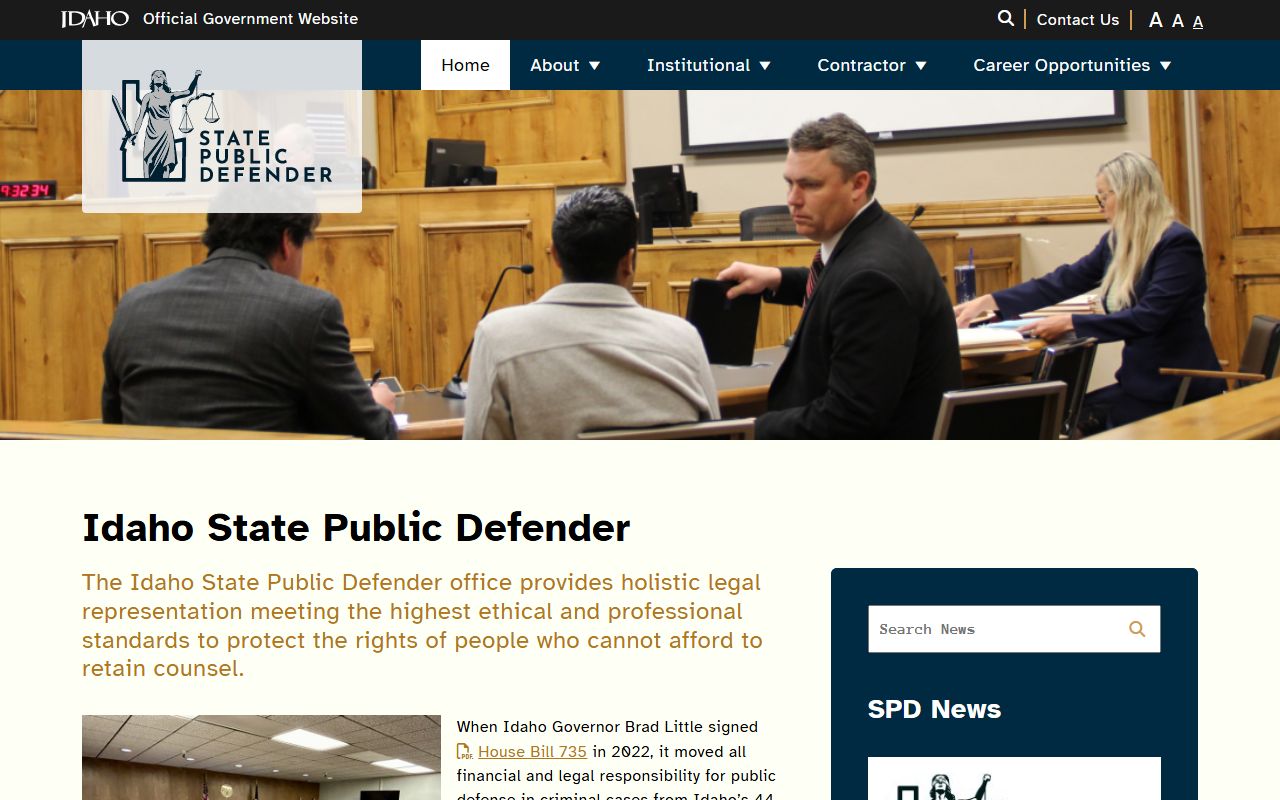
The State Public Defender is relevant because appointed counsel requests flow through the court process, and the judge determines eligibility.
The State Public Defender office information page is also assigned to this Clark County criminal records page.
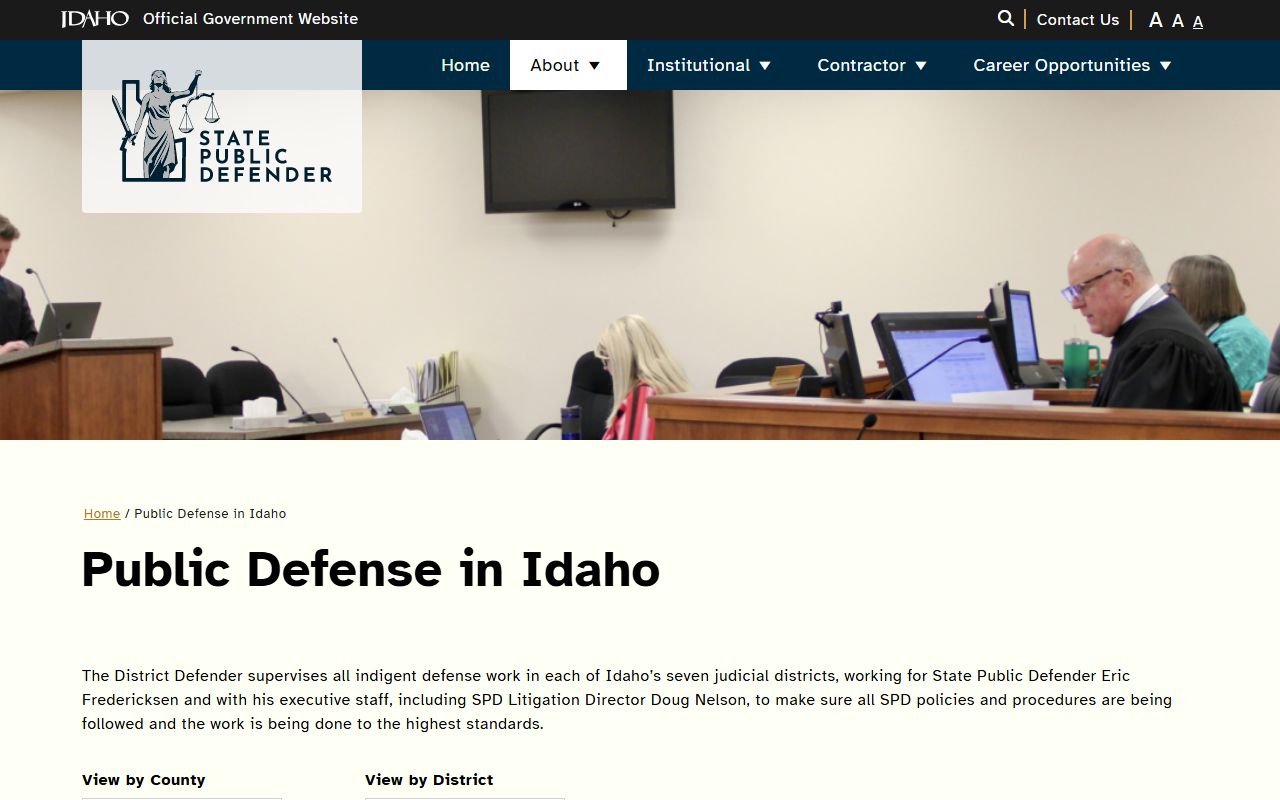
For direct state contact, the State Public Defender is listed at 322 E. Front Street, Suite 590, Boise, Idaho 83702, phone 208-605-4575, and toll free 1-888-592-6680.
Clark County Sealed Criminal Records
Restricted criminal records require careful terms. A sealed record is hidden from public access by court order, rule, or statute, but it may still exist for limited court or official purposes. Expungement is a statutory record-relief process. Idaho juvenile expungement has its own law, while adult criminal relief depends on the charge, outcome, sentence, and the specific statute or rule involved.
| Point | Sealed | Expunged |
|---|---|---|
| Public visibility | Hidden from ordinary public portal access. | Removed or treated under the governing expungement statute. |
| How it happens | Court order, ICAR 32, or other legal authority. | Statutory petition or process, such as juvenile expungement. |
| Portal effect | iCourt says sealed cases and sealed event entries do not appear publicly. | Portal and agency updates depend on the order and agency process. |
| Key caution | An order to seal accompanying a sealed record may remain public. | Do not assume every adult case can be erased. |
The criminal records manifest includes Idaho Code 20-525A for juvenile record expungement.
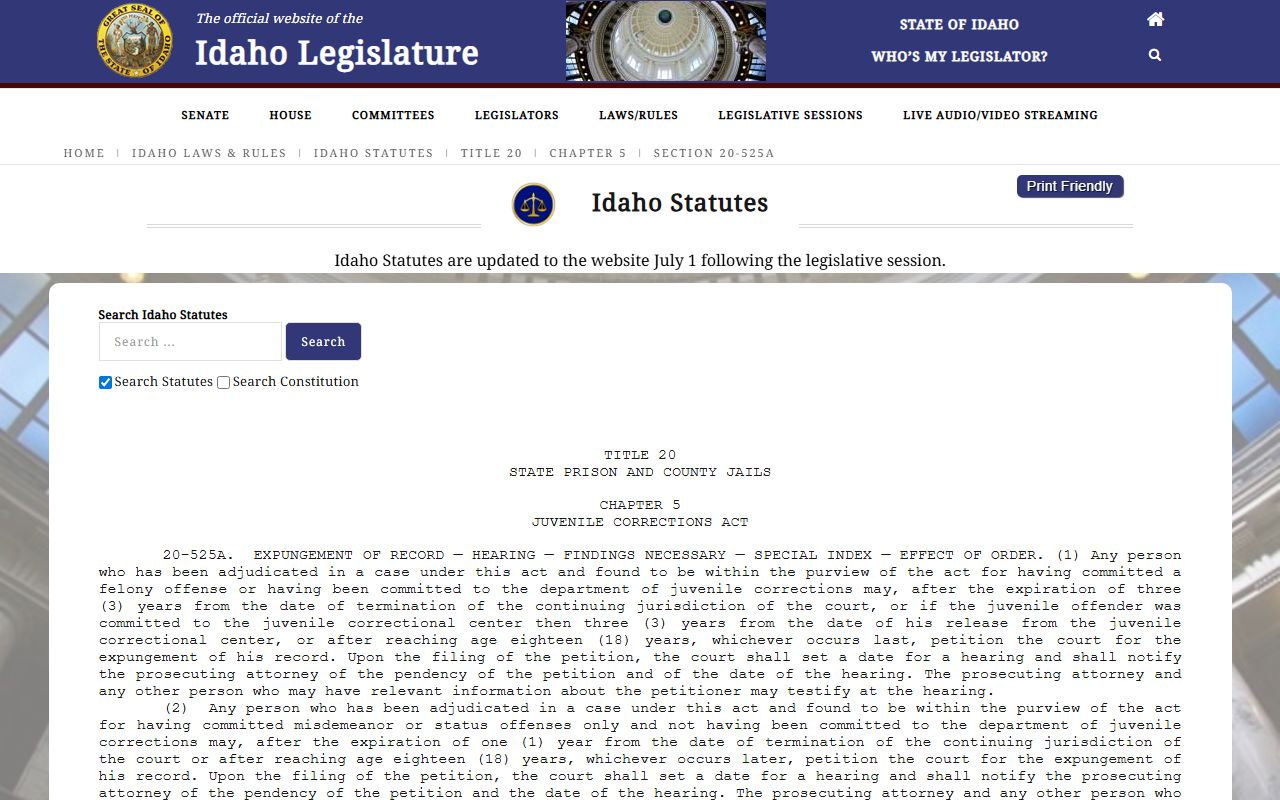
That statute is important because juvenile expungement is a separate path from adult criminal sealing or general record correction.
Clark County Criminal Access Limits
Criminal case records are public only to the extent allowed by Idaho law, court rules, and court orders. Idaho Code 74-102 addresses the public right to inspect and copy records unless an exemption applies. Idaho Court Administrative Rule 32 controls access to Idaho judicial records, including exemptions, sealing, redaction, and shielded records.
The Idaho Code 74-102 image is assigned to Clark County criminal court records.
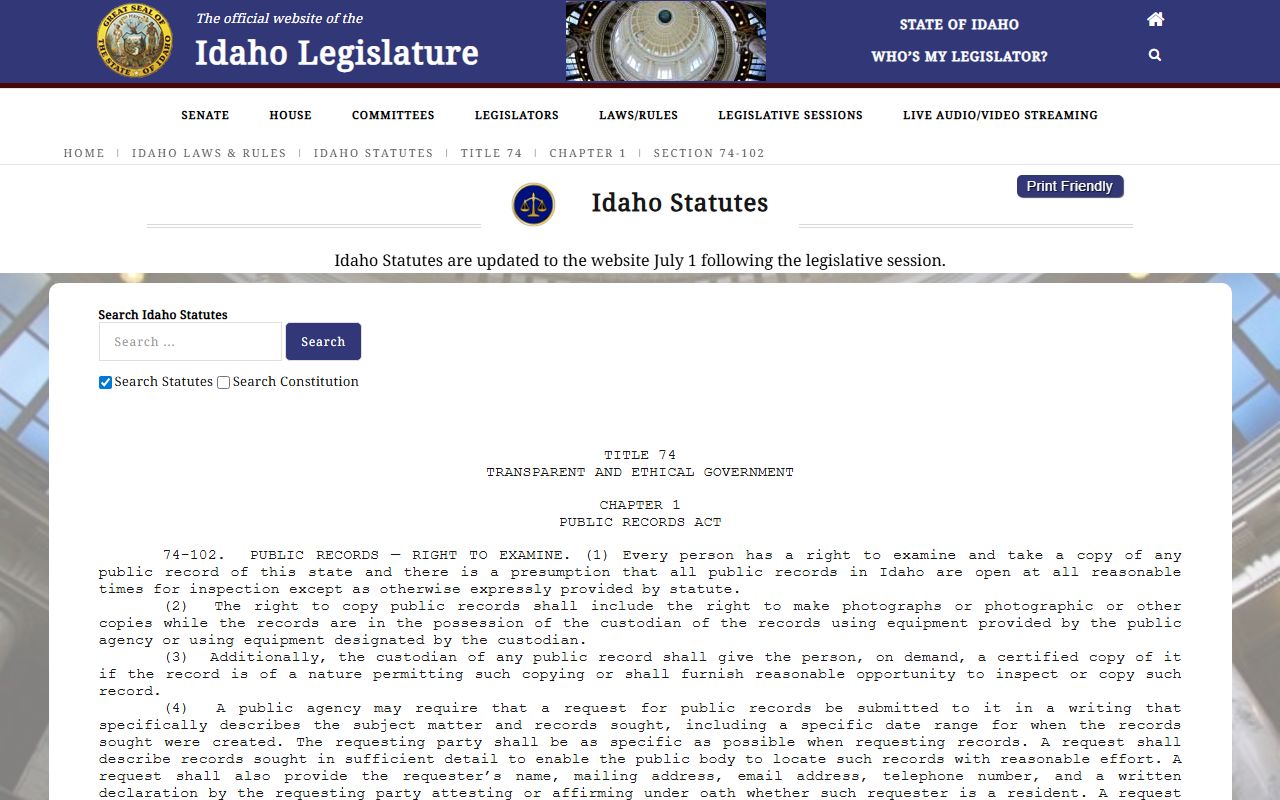
Public-record law supports access, but criminal court records still have juvenile, sealed, adoption, mental-health, and personal-identifier limits.
Clark County's Public Record Request form asks for requester contact details, requested information, number of copies, signature, and date. It states that a Clark County representative will contact the requester within three working days. Fees listed on the form include the first 100 copies free, extra copied pages at $0.10, recorded documents at $1.00, and staff time at $18 per hour after two free hours.
For a criminal case, a public-record request should be specific. Use the case number if known, name the document sought, and state whether a plain copy or certified copy is needed. A broad request for every criminal record tied to a person may take longer and may still exclude sealed, juvenile, exempt, or redacted material. If the question is only about case status, iCourt is usually faster. If the question is about a filed order, plea, judgment, sentence, or payment record that must be used for an official purpose, the Clerk is the better confirmation point.
Federal Criminal Cases Differ
Federal criminal cases are not Clark County District Court records and are not searched in iCourt. The U.S. District and Bankruptcy Courts for the District of Idaho handle federal matters, and federal docket access uses PACER or federal court public terminals. Appeals from the District of Idaho go to the Ninth Circuit. A federal indictment, federal supervised release case, or federal criminal judgment should be checked through federal systems instead of the Clark County Clerk.
The manifest includes the U.S. District and Bankruptcy Courts for the District of Idaho.
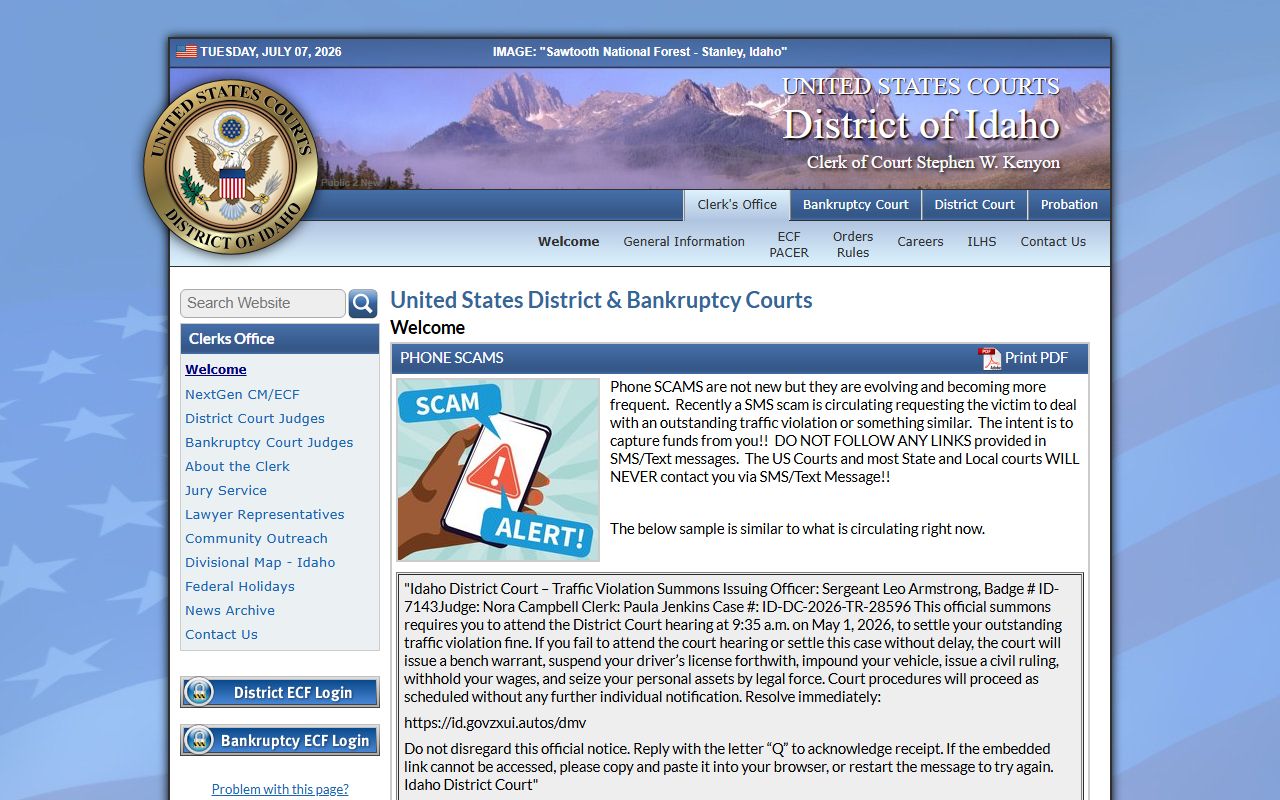
This federal source helps prevent confusion between Idaho state criminal court records and federal criminal docket records.